


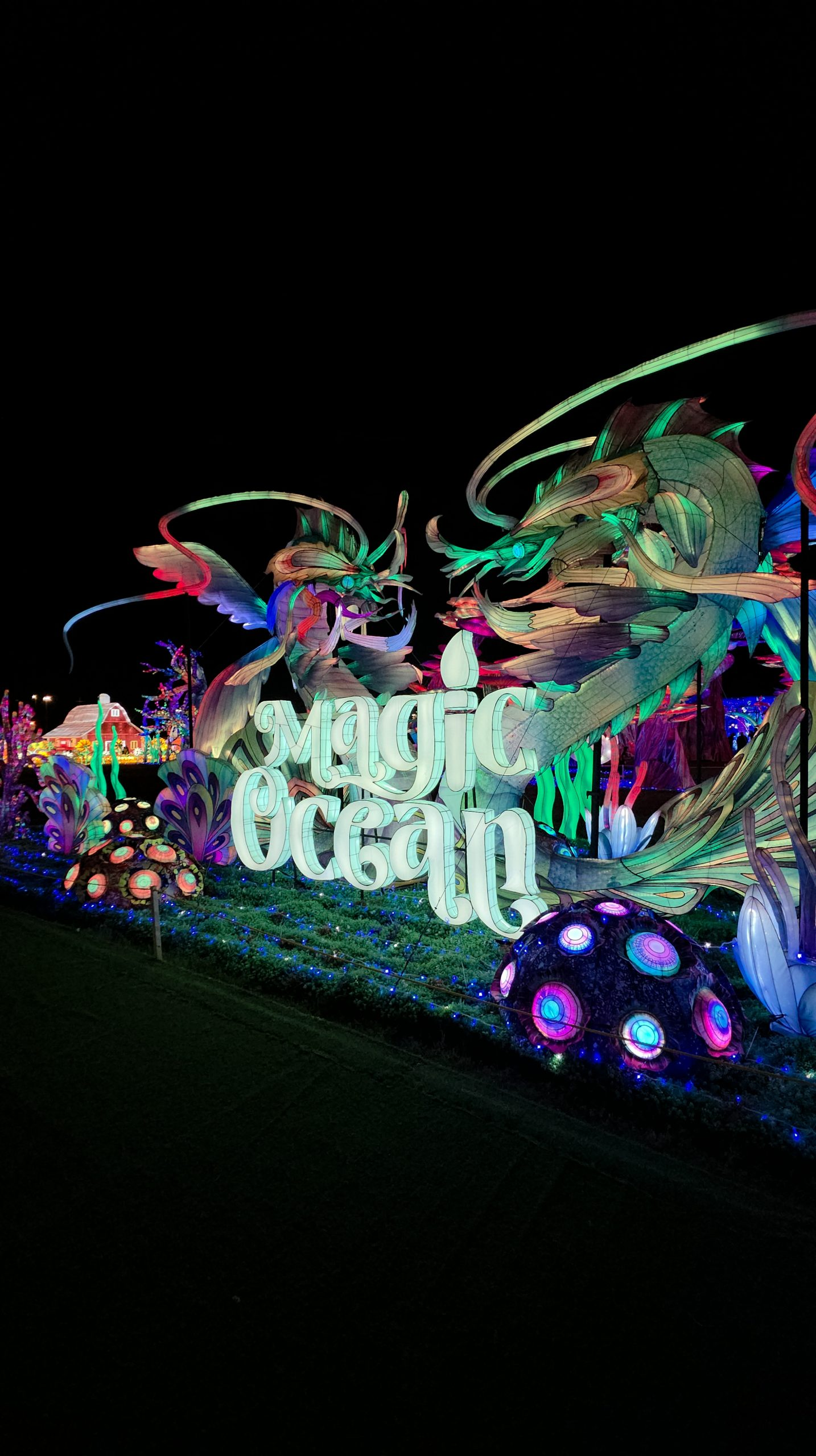
From November 7, 2025 through January 18, 2026, Tianyu Lights Koda’s Adventure to the Magical Ocean operates on the festival grounds . On the surface, it reads as seasonal entertainment. Lanterns. Light. Families walking through illuminated scenes.
This is not a casual pop up. It is a long run installation built to move thousands of people through a controlled environment each night. The economic value is not only in ticket revenue. It sits in how the experience manages flow, partners with vendors, activates surrounding property and creates a repeatable operating model that cities increasingly rely on to drive off season foot traffic.
An Immersive Experience
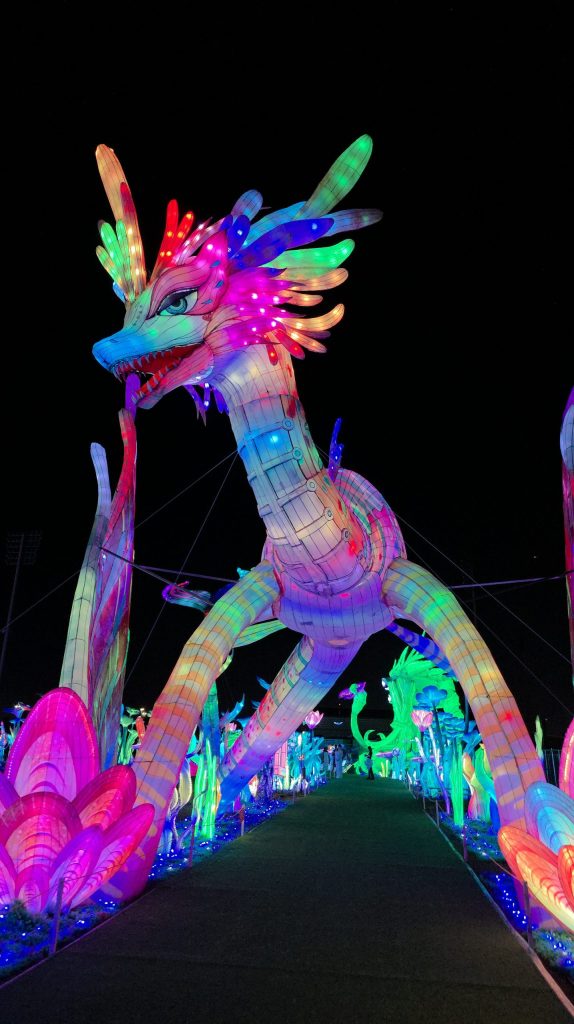
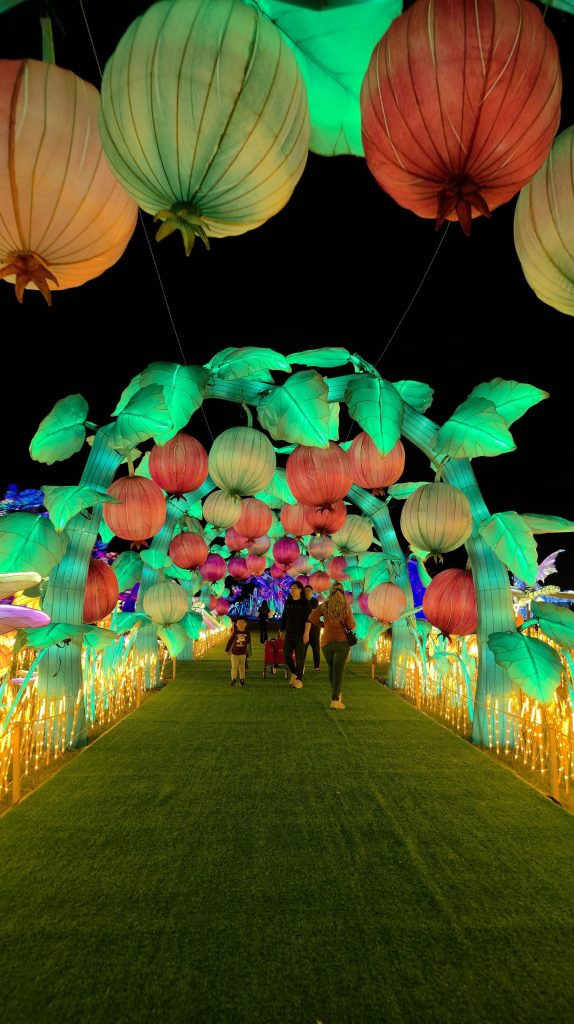
Large immersive attractions succeed or fail on one factor most guests never consciously notice. Throughput. How many people can enter, move, pause, spend, and exit without friction. The festival grounds are at the Texas Trust CU Theatre are well suited for this type of operation. Wide paths. Open sight lines. Multiple routes that prevent bottlenecks. Space that allows guests to self pace while still progressing forward.
This matters now because consumer tolerance for congestion is low. Families expect stroller friendly movement. Parents expect space for children to explore without chaos. The experience unfolds across glowing environments that feel expansive rather than crowded. That is not accidental. It allows ticket volume to scale while protecting perceived quality.
The price range supports this strategy. Entry tickets from roughly twenty to thirty dollars anchor expectations. Guests arrive primed for value rather than exclusivity. That widens the market. At the same time, controlled circulation allows on site spending to layer on top. Food vendors. Alcohol booths. Small discretionary purchases that increase revenue per guest without pressuring the core experience.
From a business standpoint, this is a clean model. Ticketing handles access. Space handles flow. Vendors handle incremental revenue. Staff focus on guest experience rather than crowd control. That separation of responsibilities keeps execution consistent across a multi month run.
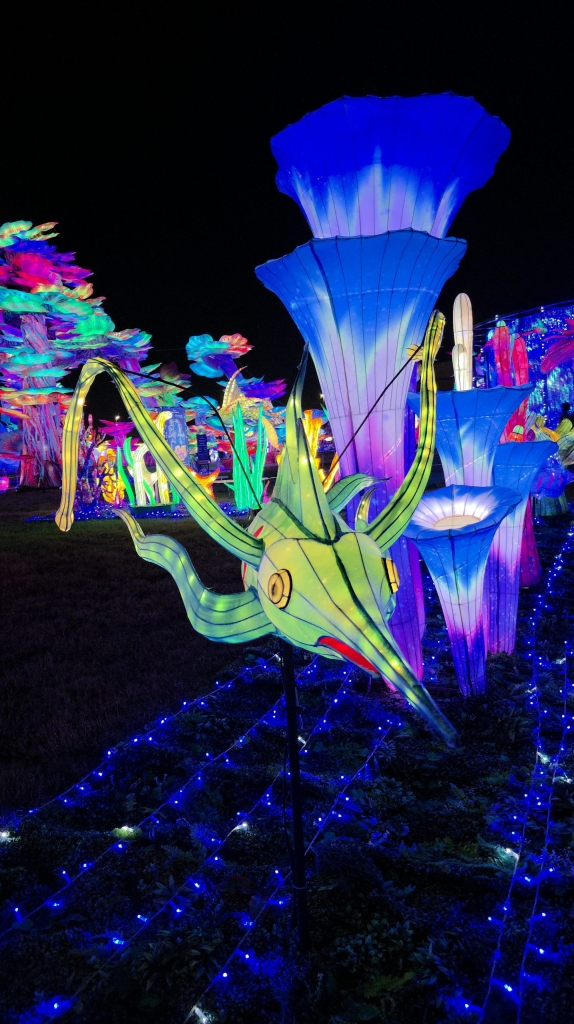
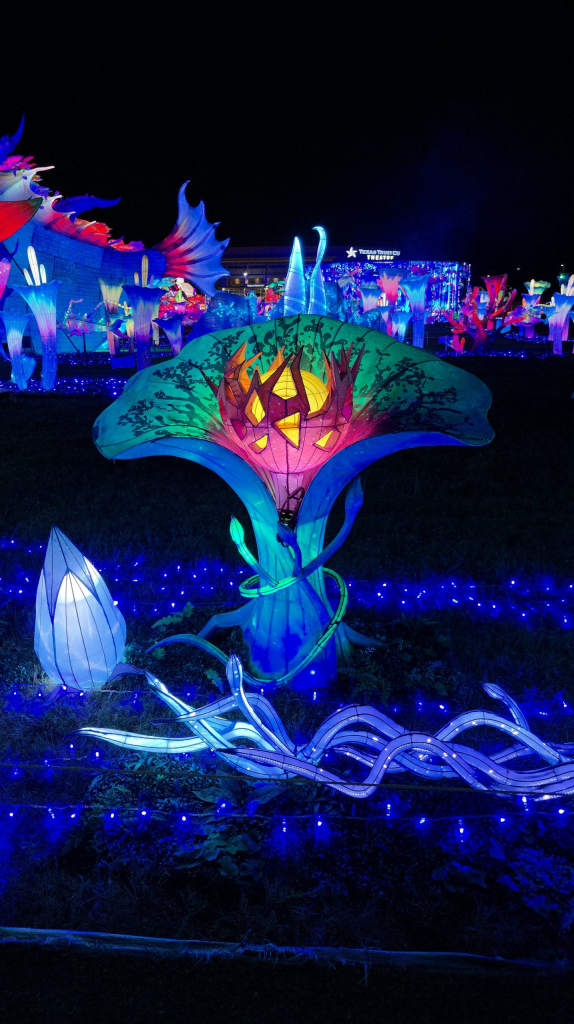
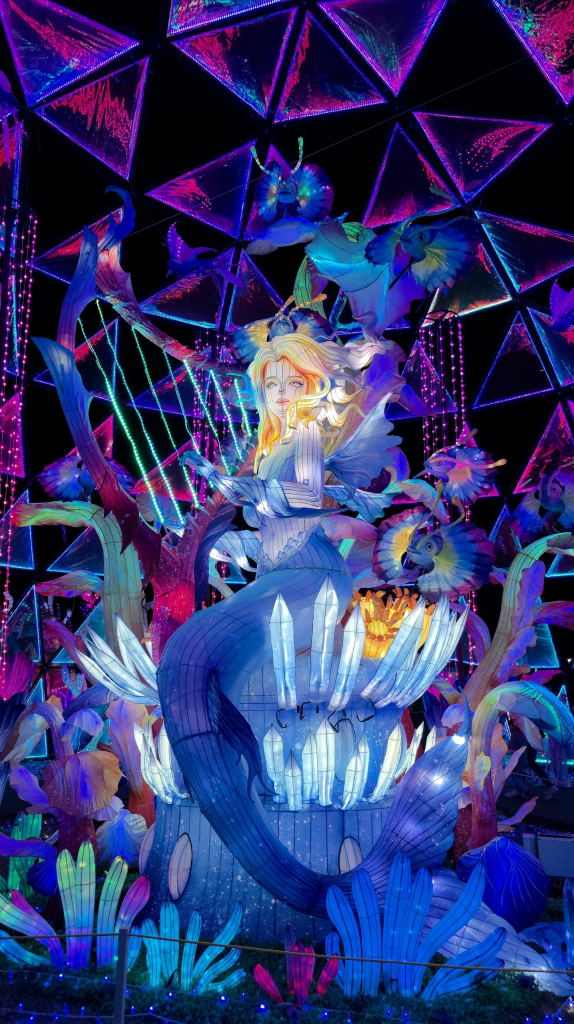
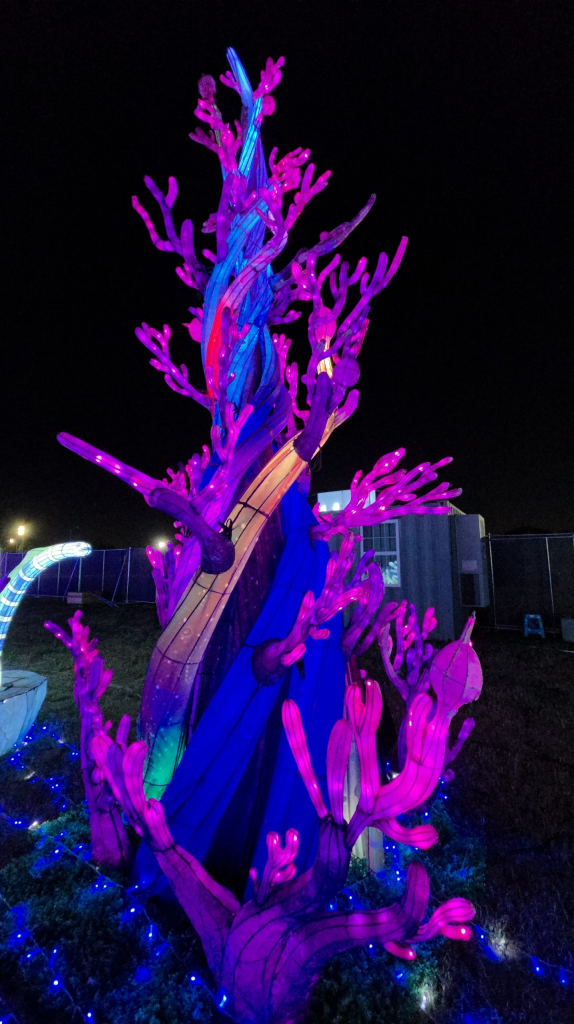
The visual narrative of Koda’s journey through glowing oceans and dreamlike landscapes does more than entertain. It slows guests down in the right places. It encourages photos. It creates moments of pause without stopping circulation entirely. That balance is how throughput remains high without feeling rushed.
For cities and venue operators, this model matters now because it demonstrates how experiential attractions can operate at scale without relying on constant novelty.
Time Windows
Tianyu Lights Festival operates only four nights per week. Entry begins at 6:00 pm. The last ticket is sold at 8:30 pm.
Limited operating days concentrate demand. Guests plan ahead. Attendance clusters into predictable peaks. Staffing can be scheduled with precision. Training quality improves because teams are not stretched thin across seven days. Equipment and installations receive downtime for inspection and upkeep. Visual quality stays high throughout the season.
The evening schedule also aligns with consumer behavior. Families look for contained nighttime activities that feel special but manageable. An early evening entry window captures that demand without pushing late night fatigue. For adults, the presence of alcohol booths extends appeal without shifting the tone into nightlife territory.
Visitor Services
Food vendors and alcohol booths are not side features. They are economic multipliers. Their placement within the festival grounds turns passive foot traffic into active commerce. Guests arrive for the lanterns. They stay longer because amenities are available. Dwell time increases. Spending follows.
This matters now because standalone attractions often fail to capture secondary revenue. For that reason they integrating vendors directly into the flow. There is no need to leave the experience to eat or drink. That keeps guests on site and engaged.
Large open parking supports volume without valet. Guests often pair the event with nearby restaurants or shows. That spillover supports the surrounding area during months that are traditionally quieter for outdoor activity.
From a workforce perspective, the event creates seasonal jobs. Setup crews. Operations staff. Vendor teams. Security. Maintenance. These roles provide short term employment with repeatable scheduling. For vendors, the partnership offers predictable traffic rather than one off bursts.
An Event Engine
Tianyu Lights Festival temporary installations offer flexibility. They can adapt. They can rotate themes. They can respond to audience data and this fits that framework while maintaining a cohesive narrative that feels intentional rather than improvised.
The lantern story is accessible. It does not rely on language or cultural specificity that limits audience reach. That broad appeal supports consistent turnout across demographics. Families. Couples. Tourists. Local residents. Each group finds a reason to attend.
For Dallas and Grand Prairie, the benefit is immediate and tangible. Seasonal activation. Job creation. Increased foot traffic. A positive signal that the city supports well run cultural experiences. These factors contribute to long term brand equity for the area.
The forward looking implication is clear. As cities compete for attention and spending, experiences like Koda’s Adventure represent a sustainable middle ground. They are immersive without being exclusive. Profitable without being disruptive. Temporary without being disposable.
In an economy that rewards execution over hype, this is a smart and well done festival.
