



Inside a Curve That Changed Dallas Traffic, Tone, and Nightfall
Eyes on the ground, fingers on the keyboard.
At a Glance
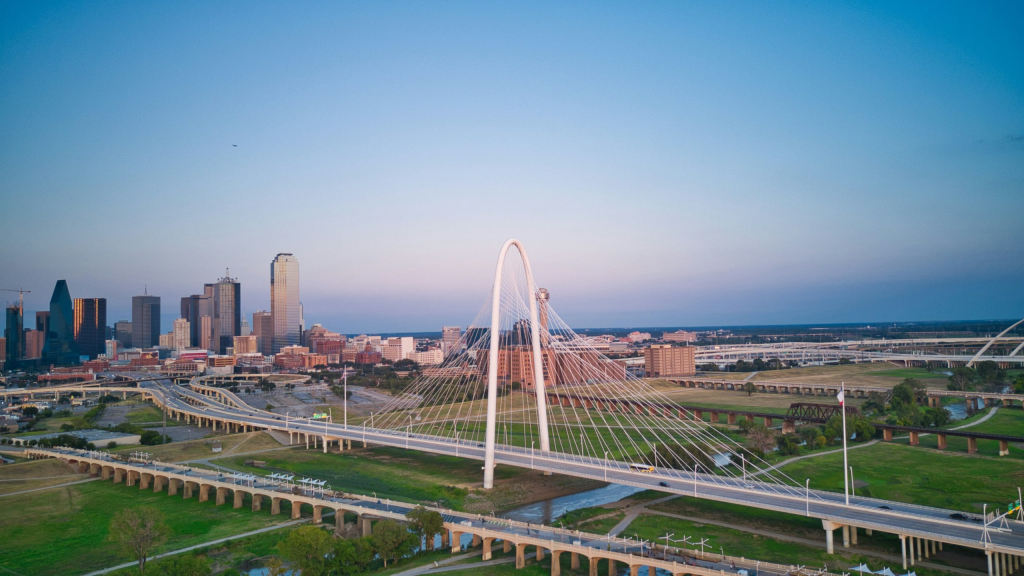
The Margaret Hunt Hill Bridge is not just a way across the Trinity River. It is a piece of civic persuasion. Opened in 2012 and designed by Santiago Calatrava, the bridge arrived at a moment when Dallas was rethinking how infrastructure could do more than move cars. It had to move perception, unlock land, and stitch together parts of the city that had long felt adjacent but unequal.
From the first drive across, the message is unmistakable. The single white arch leans forward, the cables fan out with intention, and the roadway feels guided rather than dumped into West Dallas. This was not accidental. It took roughly a decade from early planning to opening, with years spent aligning engineering, funding, and political will. The result is a structure that behaves like a gateway, not a bypass.
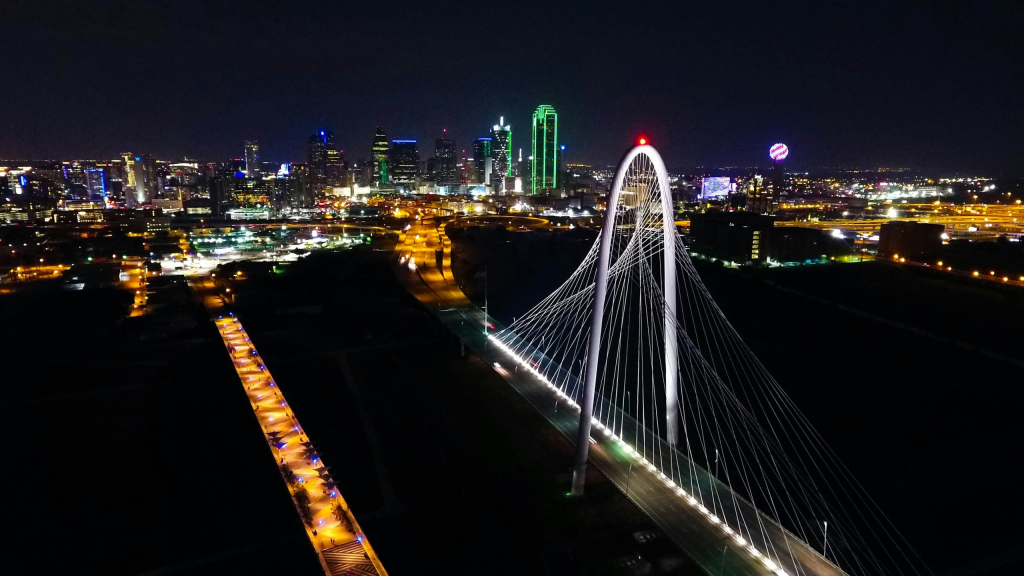
At night, when the arch glows and downtown’s skyline sharpens behind it, the bridge becomes something else entirely. Less utility, more signal. It tells drivers they are entering a part of the city that matters and tells the city itself that infrastructure can carry identity as well as traffic.
How It Actually Helps Traffic
Before the bridge opened, crossings between downtown and West Dallas were limited and indirect. The Margaret Hunt Hill Bridge added six lanes designed to relieve pressure from the aging Continental Avenue Bridge and nearby corridors. Traffic flow improved not because volume alone increased, but because routing became clearer.
The bridge feeds directly into the downtown freeway network on one side and Singleton Boulevard on the other, creating a clean east–west connection. Commute times from West Dallas into the central business district shortened measurably in the years following its opening, particularly during peak morning hours. For freight and service vehicles, the predictability of the crossing reduced idling and cut down on circuitous detours that had quietly inflated costs for years.
What matters most is not speed but reliability. The bridge absorbs daily volume without feeling congested, and that reliability changes driver behavior. People choose it consistently, which stabilizes traffic patterns across the surrounding network.
Design Choices That Shape Behavior
Calatrava’s design does more than look dramatic. The sweeping arch and cable layout subtly narrow the visual field, encouraging drivers to slow slightly without aggressive signage or enforcement. The roadway feels intentional and monitored, even when traffic is light.
Pedestrians and cyclists experience a similar effect. The separation between modes is clear, and the elevation provides uninterrupted sightlines. People linger. They stop. They take photos. Infrastructure rarely invites pause, but this one does, and that pause reinforces a sense of safety and civic pride.
Lighting plays a critical role. At night, the bridge is evenly illuminated, eliminating the shadow pockets that often make crossings feel hostile after dark. The glow of the arch is not decorative excess; it is wayfinding, reassurance, and branding rolled into one.
Spillover Effects Into West Dallas
The bridge’s most significant impact is not on the roadway but beyond it. Land values in West Dallas increased steadily after 2012, and investment followed. Residential developments, mixed-use projects, and improved public spaces began clustering near the bridge’s western landing.
This was not automatic. Infrastructure does not guarantee equity. But the bridge changed the conversation. West Dallas was no longer framed as “across the river” in a dismissive sense. It became connected, visible, and reachable in minutes. Developers noticed. So did small businesses that rely on foot traffic and proximity to downtown amenities.
The Trinity Groves area, in particular, benefited from the psychological closeness created by the bridge. People who might not have crossed the river casually before began doing so for dinner, events, and weekend walks. The bridge normalized movement, and normalization is often the first step toward sustained economic activity.
Measurable Indicators That Matter
Traffic counts show consistent daily usage well within design capacity, indicating the bridge is neither underutilized nor overstressed. Property assessments in adjacent areas reflect long-term appreciation rather than speculative spikes, a sign of durable growth.
Tourism metrics tell a quieter story. The bridge appears regularly in skyline photography, real estate marketing, and city branding materials. That visibility has value. It reinforces Dallas as a city willing to invest in ambitious public works, which influences corporate relocation decisions and talent perception more than most residents realize.
Nighttime usage also increased, supported by lighting and surrounding development. A bridge that feels safe after dark extends the city’s functional hours, which has downstream effects on dining, entertainment, and cultural programming.
One Critique, Framed Honestly
The most common critique is cost. The bridge exceeded early estimates, raising legitimate questions about fiscal discipline and long-term maintenance obligations. That concern is valid and necessary. Public trust depends on accountability.
Reframed positively, the scrutiny forced Dallas to refine how it manages large-scale civic projects. Lessons from this build influenced later infrastructure planning, budgeting controls, and public communication strategies. The bridge became a case study, not a cautionary tale.
The Night Version Matters
During the day, the bridge reads as engineering. At night, it becomes narrative. The illuminated arch anchors the skyline, creating a visual handshake between downtown and West Dallas. It is no accident that photographers gravitate toward it after sunset.
Nighttime infrastructure shapes how safe a city feels and how long people stay out. The Margaret Hunt Hill Bridge extends Dallas’s visual confidence into the evening, reinforcing the idea that the city does not shut down after office hours. That matters more than it sounds.
The Takeaway
The Margaret Hunt Hill Bridge succeeds because it does multiple jobs at once. It moves traffic efficiently, reshapes behavior through design. It catalyzes development without shouting about it. And at night, it reminds Dallas that infrastructure can be both practical and expressive.
This is what happens when a city treats a bridge as a civic statement rather than a checkbox. If you find yourself slowing down as you cross it, looking back at the skyline, that is not distraction. That is design doing its work.
Subscribe for access to exclusive editorial content
