



Down The Block
The Fort Worth Museum of Science and History has become more than a school field trip stop. It is evolving into one of the most strategic cultural anchors in North Texas. Families are not just visiting. They are building routines around it.
Located in the Cultural District, the museum sits steps from the Will Rogers complex and across from the National Cowgirl Museum. Its footprint feels expansive the moment you walk up to the glass façade. Inside, the air hums with conversation and moving exhibits.
This is not a nostalgia play. It is a modern institution leaning into experience design, membership economics, and multigenerational appeal.
Inside Fort Worth’s Science Hub
The museum operates as a multi venue campus. It houses permanent exhibit galleries, the Noble Planetarium, the Omni Theater, the Cattle Raisers Museum, and Galaxy Park Playground. Each piece serves a different age bracket yet the layout flows without friction.
The Noble Planetarium delivers live star talks and immersive astronomy programming under a domed ceiling. The Omni Theater features large format film experiences that feel cinematic and physical. The Cattle Raisers Museum grounds the space in Texas heritage with curated artifacts and ranching history.
Galaxy Park Playground is designed for younger children with hands on exploration zones and kinetic installations. It is bright, tactile, and built for movement.
Exhibits rotate through science, innovation, energy, biology, and regional history. Current exhibit categories listed include museum exhibits, the planetarium, the Omni Theater, and the Cattle Raisers Museum. Upcoming events are promoted prominently which keeps the calendar active year round.
The institution also supports field trips, birthday parties, and private event rentals. That diversification matters. It positions the museum as both an educational hub and a rentable lifestyle venue.
Hours That Follow the City’s Rhythm
The museum is open Tuesday through Saturday from 10 AM to 5 PM. On Sunday it operates from Noon to 5 PM. It is closed on Mondays.
Those hours reflect a clear operational focus. They prioritize school groups midweek and families on weekends. Sunday noon openings align with church culture in Texas which signals awareness of the local rhythm.
Heavy field trip seasons are publicly communicated on the homepage. That transparency manages expectations before guests arrive. It also reinforces how embedded the museum is in the education ecosystem.
Pricing That Keeps It Accessible
Admission pricing is structured for accessibility without undercutting value.
Adult tickets for ages 12 to 64 are priced at $16. Senior tickets for ages 65 and up are $14. Junior tickets for ages 3 to 11 are $12. Children ages 0 to 2 are free.
Admission to the museum does not include Omni Theater shows which are ticketed separately. That upsell model allows the museum to maintain an affordable base price while monetizing premium experiences.
Tickets are valid only for the date purchased and are non transferable. That policy reduces secondary market friction and controls capacity.
In a metro where experiential pricing can escalate quickly, this structure feels measured. A family of four can attend for under $60 before add ons. That matters in a city balancing rapid growth with middle class roots.
Membership as the Real Power Move
Membership tiers reveal the larger play.
The Discover membership serves families focused on local engagement. Pricing begins at $90 for two people, $130 for five people, and $180 for eight people.
The Wonder membership expands access beyond Fort Worth with reciprocal benefits at the Perot Museum in Dallas and the Heard Wildlife Sanctuary. Pricing starts at $140 for two people, $210 for five people, and $270 for eight people.
The Imagine membership targets grandparents and extended family groups. It is priced at $365 for a grandparents membership and $500 for a group membership.
Then there is Lamplighter’s Circle which begins at $1,000 and functions as a patron level. It supports the museum’s mission while positioning members as philanthropic stakeholders.
This tiered structure is intentional. It captures young families, multigenerational households, and high net worth patrons without overlap confusion. It also leverages cross city collaboration through reciprocal access.
Membership turns the museum from a one time outing into a lifestyle subscription.
A Cultural Staple Reclaiming Attention
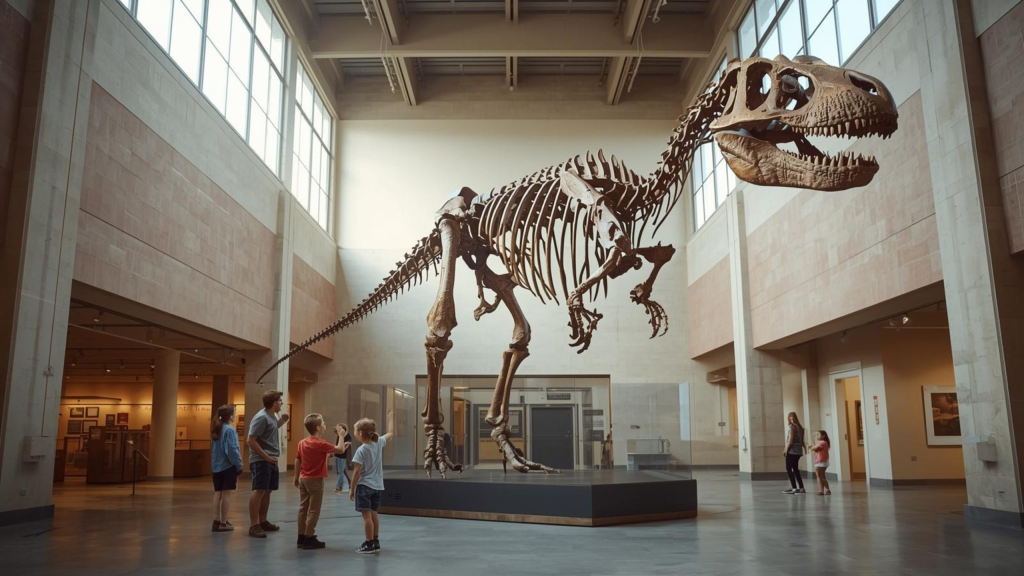
The Fort Worth Museum of Science and History is experiencing a quiet cultural resurgence. It is not driven by viral moments. It is driven by structural design.
Families are seeking predictable experiences that blend education and entertainment. Museums that modernize their programming without losing credibility are winning. This institution is leaning into that balance.
Where it is showing up most visibly is in social media content around weekend family plans, homeschool communities, and parent group recommendations. It has become shorthand for a productive Saturday.
Rooted in the Cultural District
Its location amplifies the effect.
The Cultural District has evolved into a curated corridor of institutions including the Kimbell Art Museum and the Modern Art Museum of Fort Worth. The museum anchors the family segment of that corridor.
You can feel the foot traffic shift on weekends. Strollers line the sidewalks and museum tote bags move between buildings. The district reads cohesive rather than fragmented.
That clustering effect reinforces its status as a core attraction rather than a niche site.
Smart Shifts in Design and Service
The museum’s web interface signals clarity and direct booking. Tickets are accessible from the top navigation. Membership pages present pricing without hidden language.
The homepage surfaces heavy field trip seasons and operating hours immediately. That reduces friction and manages flow.
Exhibit categories are organized under Explore with clear segmentation between planetarium, Omni Theater, playground, and historical museum content. This reduces cognitive load for parents planning visits.
The shift here is toward transparency and modular choice. Guests can curate their day instead of feeling guided through a fixed path.
Loyalty Built on Repeat Visits
Audience response is visible in repeat visitation patterns and multigenerational memberships.
Grandparent focused tiers suggest demand from families that treat the museum as neutral meeting ground. It is climate controlled, educational, and centrally located.
School partnerships reinforce weekday attendance. That steady stream of students builds early brand familiarity.
Reciprocal benefits with Dallas institutions position it as part of a broader regional ecosystem. That encourages cross city travel.
The result is less reliance on one time tourists and more reliance on local loyalty.
Proof in the Programming
First, the Noble Planetarium programming reflects modern interest in space science. Astronomy content is resurging culturally. Offering immersive dome experiences keeps the museum aligned with national curiosity around space exploration.
Second, the Omni Theater maintains large format film as a premium add on. Instead of folding it into general admission, the museum protects its cinematic identity. That separation preserves perceived value.
Third, membership reciprocity with the Perot Museum and the Heard Wildlife Sanctuary expands geographic relevance. It turns a Fort Worth membership into a North Texas pass. That elevates the perceived return on investment.
These are not cosmetic updates. They are strategic levers.
Where the City Benefits
The community upside extends beyond family recreation.
Field trips integrate STEM exposure at scale. Students interact with tactile exhibits rather than passive screens.
Local event rentals create revenue pathways that feed back into programming. Birthday parties generate emotional loyalty in younger demographics.
Lamplighter’s Circle invites philanthropic investment which strengthens financial resilience. That matters in a city that continues to expand population and infrastructure.
Cultural institutions that scale responsibly stabilize urban growth. They provide continuity as neighborhoods densify.
The museum functions as educational infrastructure disguised as entertainment.
Positioned for a Growing Fort Worth
Fort Worth has seen significant residential development over the past decade. As population increases, demand for family friendly venues grows.
Pricing at the museum sits below many commercial entertainment alternatives. That positions it as value oriented rather than luxury oriented.
Membership tiers create predictable annual revenue. Predictability enables exhibit refresh cycles and long term planning.
The Cultural District benefits from cross visitation which supports adjacent museums and dining venues. The economic ripple spreads outward.
Texas Heritage Anchors the Experience
The Cattle Raisers Museum grounds the institution in Texas identity.
While the science and innovation exhibits push forward, this historical anchor pulls backward into heritage. That duality matters in Fort Worth which balances modern growth with ranch culture.
Visitors move from interactive science installations into curated historical artifacts. The shift in lighting and tone creates contrast.
This integration avoids cultural fragmentation. It ties future innovation to regional roots.
A Playground That Converts Parents
Galaxy Park Playground functions as an onboarding tool for younger children.
Bright structures and tactile surfaces create immediate engagement. Parents observe from seating areas while children explore.
Early positive experiences shape long term attachment. Families that introduce toddlers to this space often upgrade to membership.
The design encourages movement rather than passive observation. That aligns with modern parenting priorities around active learning.
Cinema That Still Feels Grand
The Omni Theater maintains its position as a cinematic highlight.
Large format films deliver immersive visuals that standard multiplex theaters cannot replicate. The darkened room and curved screen create full field engagement.
By pricing it separately, the museum reinforces its premium status. Visitors perceive it as an event rather than an add on.
This protects the theater from being diluted into background programming.
Classrooms Beyond School Walls
The museum’s field trip visibility signals integration with local school systems.
Public messaging about heavy field trip seasons shows volume. That volume translates into thousands of annual student interactions.
Exposure during formative years increases the likelihood of adult return visits. The institution becomes part of collective memory.
Educational infrastructure builds cultural capital that compounds over time.
Booking Designed Without Friction
The ticketing system is date specific and non transferable. That reduces misuse and clarifies expectations.
Pricing is displayed without layered add ons during initial selection. Adults at $16, seniors at $14, juniors at $12.
The simplicity communicates confidence. It suggests the experience does not require gimmicks.
Clear navigation between Visit, Explore, Learn, Support, Membership, and Tickets reduces friction for first time users.
The Next Phase of Growth
The next phase likely involves deeper experiential layering.
Rotating exhibits tied to emerging science fields could amplify regional relevance. Collaborations with Texas universities would reinforce authority.
Expanded evening programming could attract young professionals without children. Adult nights and lecture series would diversify demographic reach.
Digital ticket bundling with Omni Theater experiences could increase average revenue per visitor while maintaining entry accessibility.
As Fort Worth continues to grow, the museum’s role as civic anchor will expand. Cultural institutions that modernize quietly often outlast trend driven venues.
The Fort Worth Museum of Science and History is not chasing virality. It is building infrastructure.
In a city defined by rapid change, that steadiness is the real trend.
Another family fun activity in Fort Worth is the Fort Worth Zoo
Subscribe for access to exclusive editorial content

